Reduce holiday travel stress and improve sleep with consistent routines, hydration, daylight, and intentional recovery. Estimated reading time: 9 minutes
1 Nov 2026
How to Manage Holiday Travel Stress and Sleep Better This Season
Quick Answer (TLDR)
To manage holiday travel stress and sleep better, keep your sleep and wake times as consistent as possible, shift your schedule toward your destination’s time zone, get daylight at the right times, stay hydrated, limit alcohol, and schedule real downtime. Infrared sauna and red light therapy may be relaxing additions to a recovery routine, but neither is a proven treatment for jet lag or insomnia.
Key Takeaways
- Holiday travel fatigue usually comes from three things at once: a disrupted sleep schedule, added stress, and less time for self-care.
- Timed daylight, consistent sleep, hydration, and limiting alcohol are the evidence-based foundations of travel recovery. [5, 6]
- Warm baths before bed have been linked to falling asleep faster, but research specifically on sauna and sleep remains limited. [1, 2]
- Early red light therapy (photobiomodulation) research shows modest improvements in self-reported sleep, not in objectively measured sleep. [3, 4]
- A beem® session can be a dedicated pause during a busy season, alongside healthy sleep habits rather than in place of them.
Why Does Holiday Travel Leave You Feeling So Drained?
Holiday travel drains your energy because it disrupts your sleep schedule, adds stress, and pushes self-care aside, often all in the same week. Early flights, long drives, crowded airports, and packed calendars from Thanksgiving through New Year’s leave little room to recover.
Three common factors contribute to holiday travel fatigue:
- Disrupted sleep schedules. Crossing time zones can throw off your circadian rhythm, the internal clock that helps regulate your sleep-wake cycle. The CDC notes that jet lag can affect sleep, daytime alertness, and how well you function. [5] Even without changing time zones, early departures and late arrivals can cut sleep short.
- Increased stress. Coordinating travel, managing family expectations, and navigating busy schedules can make it difficult to slow down and recharge.
- Less time for self-care. When routines change, healthy habits such as movement, regular meals, relaxation, and consistent bedtimes are often the first things to go.
The result? You may arrive feeling tired, tense, or out of sync with your usual routine. The good news is that small, intentional habits can help you make recovery a priority throughout the season.
How Can You Sleep Better While Traveling for the Holidays?
You can sleep better while traveling by protecting your sleep schedule: keep wake times consistent, follow local time at your destination, get daylight at the right times, keep naps short, and limit alcohol and late-day caffeine. These habits help your internal clock adjust and are the foundation of travel recovery. [5, 6]
Shift your schedule before you go
If you’re crossing several time zones, gradually moving your bedtime one to two hours earlier for a few days before an eastward trip, or later before a westward trip, may help your body adapt. [6]
Time your daylight exposure
Light is one of the strongest signals for your body clock. In general, morning light can help when you travel east, and evening light can help when you travel west. Once you arrive, align your meals, sleep, and activities with local time and get natural daylight. [5, 6]
Keep naps short
If you need a daytime nap, keep it brief. The CDC notes that short naps of about 20 minutes may help with alertness without making it harder to sleep at night. [5]
Stay hydrated and go easy on alcohol and caffeine
According to the CDC, dehydration can worsen the physical symptoms of jet lag, and travelers should avoid excess alcohol. Alcohol and caffeine can both contribute to dehydration. [5] Drink water regularly on travel days, and avoid relying on caffeine to push through fatigue.
Driving instead of flying?
Many holiday trips are road trips. Plan regular breaks to stretch and walk, share the driving when you can, and pull over somewhere safe if you feel drowsy.
Create a calming wind-down routine
Dim the lights, put screens away, and try gentle stretching, reading, or slow breathing before bed, especially in an unfamiliar room.
How Can You Reduce Holiday Stress Naturally?
You can reduce holiday stress naturally by protecting small pockets of downtime: build buffer time around travel days, set realistic expectations, move your body, and give yourself a dedicated self-care ritual. You don’t need an elaborate wellness routine to decompress.
A few quiet minutes, a walk outdoors, breathing exercises, or a standing appointment with yourself can create a welcome pause between holiday commitments. For some people, a visit to beem® Light Sauna becomes part of that ritual: a chance to step away from the noise, slow down, and focus on personal well-being.
Can an Infrared Sauna Help You Sleep Better?
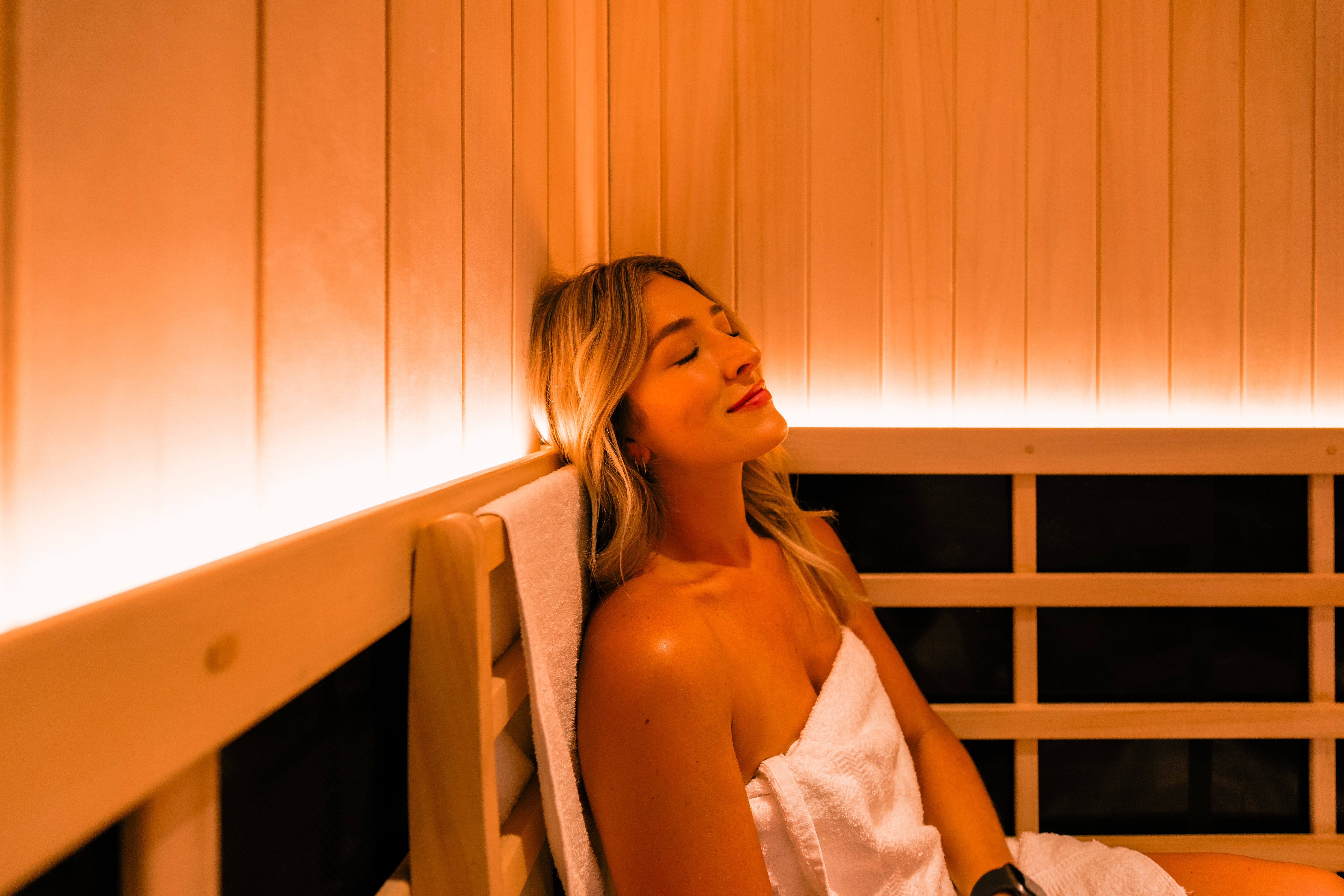
An infrared sauna may help you relax, but research has not established that it improves sleep. Studies on warm baths before bed suggest passive body heating can help people fall asleep faster, but research specifically on sauna and sleep is limited and mostly involves traditional saunas. [1, 2]
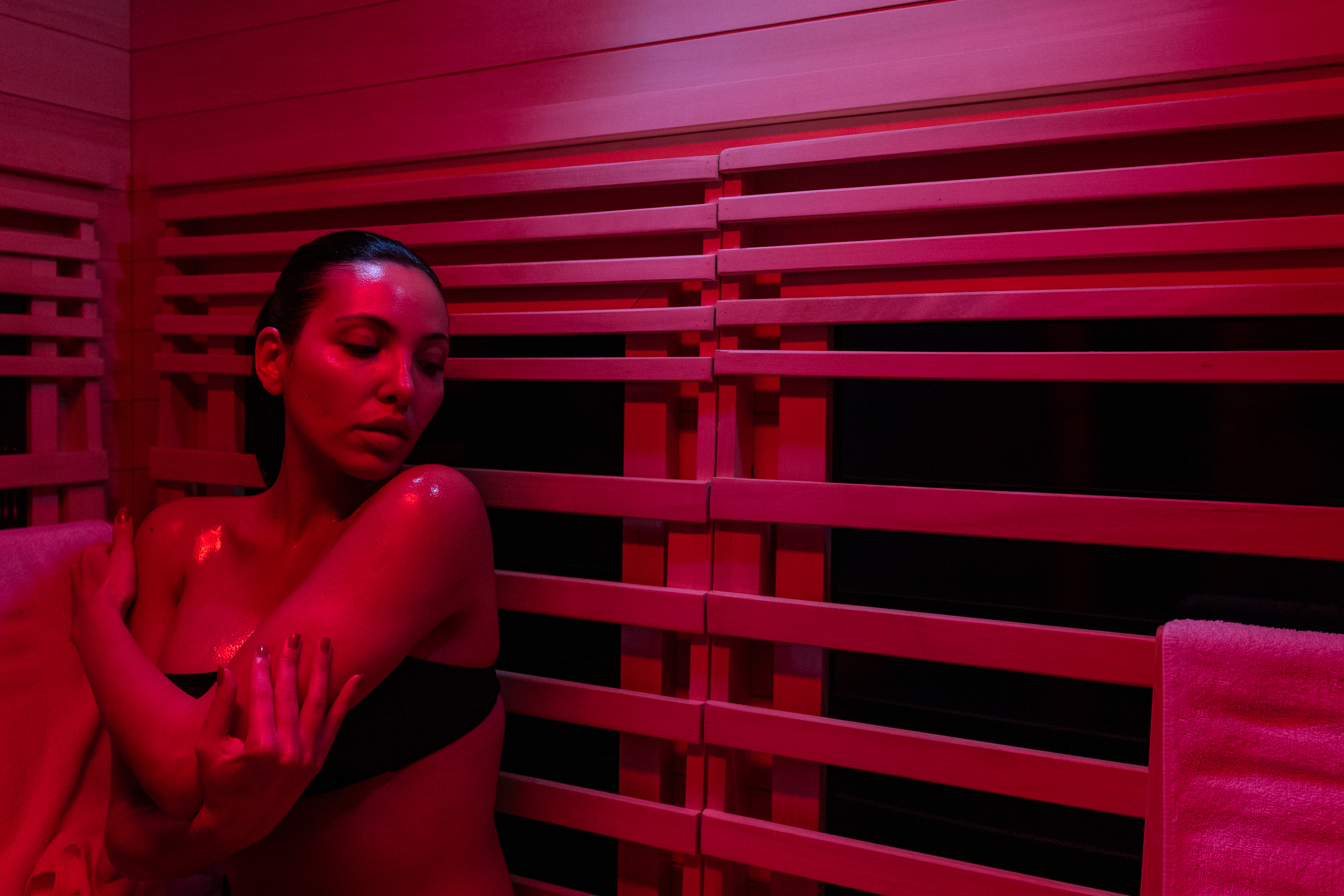
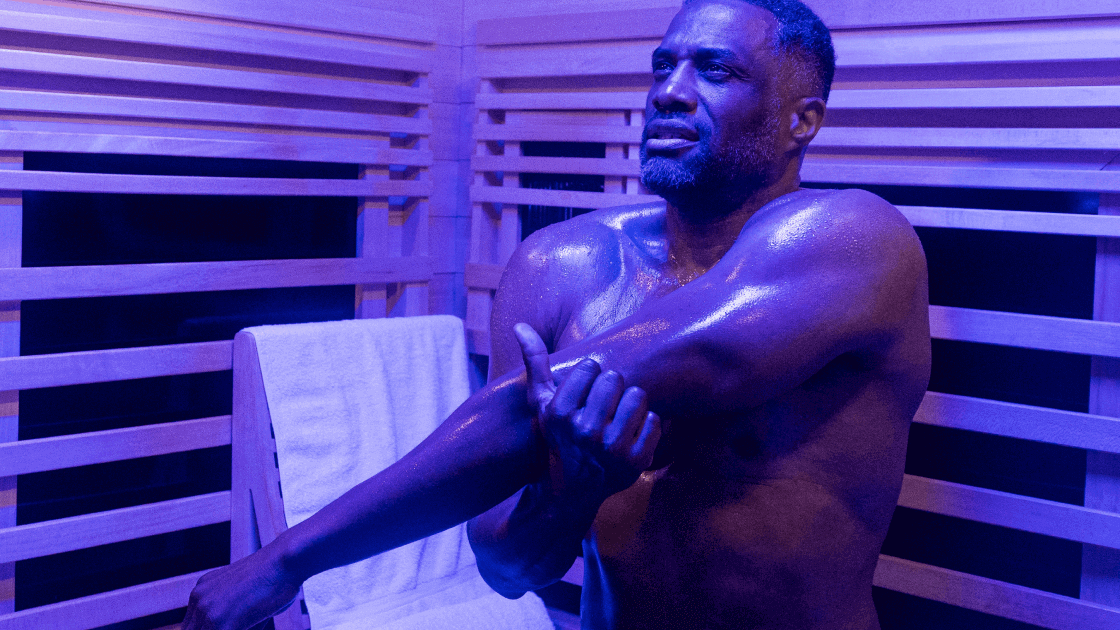
Infrared sauna uses infrared energy to warm the body directly, rather than mainly heating the surrounding air like a traditional sauna. The beem® full-spectrum infrared sauna incorporates near-, mid-, and far-infrared wavelengths, and the warmth can create a relaxing environment that encourages you to take a break from a busy day.
What does the research say? A 2019 systematic review and meta-analysis in Sleep Medicine Reviews found that warm showers or baths of roughly 104–108.5°F, taken about one to two hours before bedtime, were associated with falling asleep faster and better sleep efficiency. [1] Those studies used water, not saunas. A 2024 review of passive heat therapies, focused primarily on traditional Finnish sauna, describes preliminary findings that sauna bathing may influence sleep, though some studies involved very small groups of participants. [2]
What does this mean for holiday travelers? An infrared sauna session may offer a dedicated opportunity to unwind after a demanding day. If you book an evening session, allow time to cool down and rehydrate before bed. For better sleep while traveling, pair relaxation with consistent bedtimes, well-timed daylight, hydration, and a comfortable sleep environment.
Can Red Light Therapy Help With Sleep and Stress?
Red light therapy shows early, mixed promise for sleep. Small trials report modest improvements in self-reported sleep quality, but objectively measured sleep has not consistently changed, and devices and protocols vary widely. Red light therapy should not be considered a treatment for insomnia, stress disorders, or jet lag. [3, 4]
Red and near-infrared light therapy is often studied under the term photobiomodulation: the use of specific wavelengths of light to interact with biological tissues. Researchers are investigating how it may influence cellular processes and whether it can support aspects of recovery and well-being.
In a 2023 randomized, sham-controlled study, 30 adults with self-reported sleep complaints wore a neck-worn red and near-infrared light device, or an inactive sham device, before bed for three weeks. Active-device users reported better sleep, relaxation, and mood, but sleep measured objectively by actigraphy did not differ between the groups. [3]
A 2026 systematic review and meta-analysis of five randomized controlled trials involving 240 participants found a modest improvement in self-reported sleep quality compared with sham treatment. The authors noted that the evidence remains limited and that larger, more standardized trials are needed. [4]
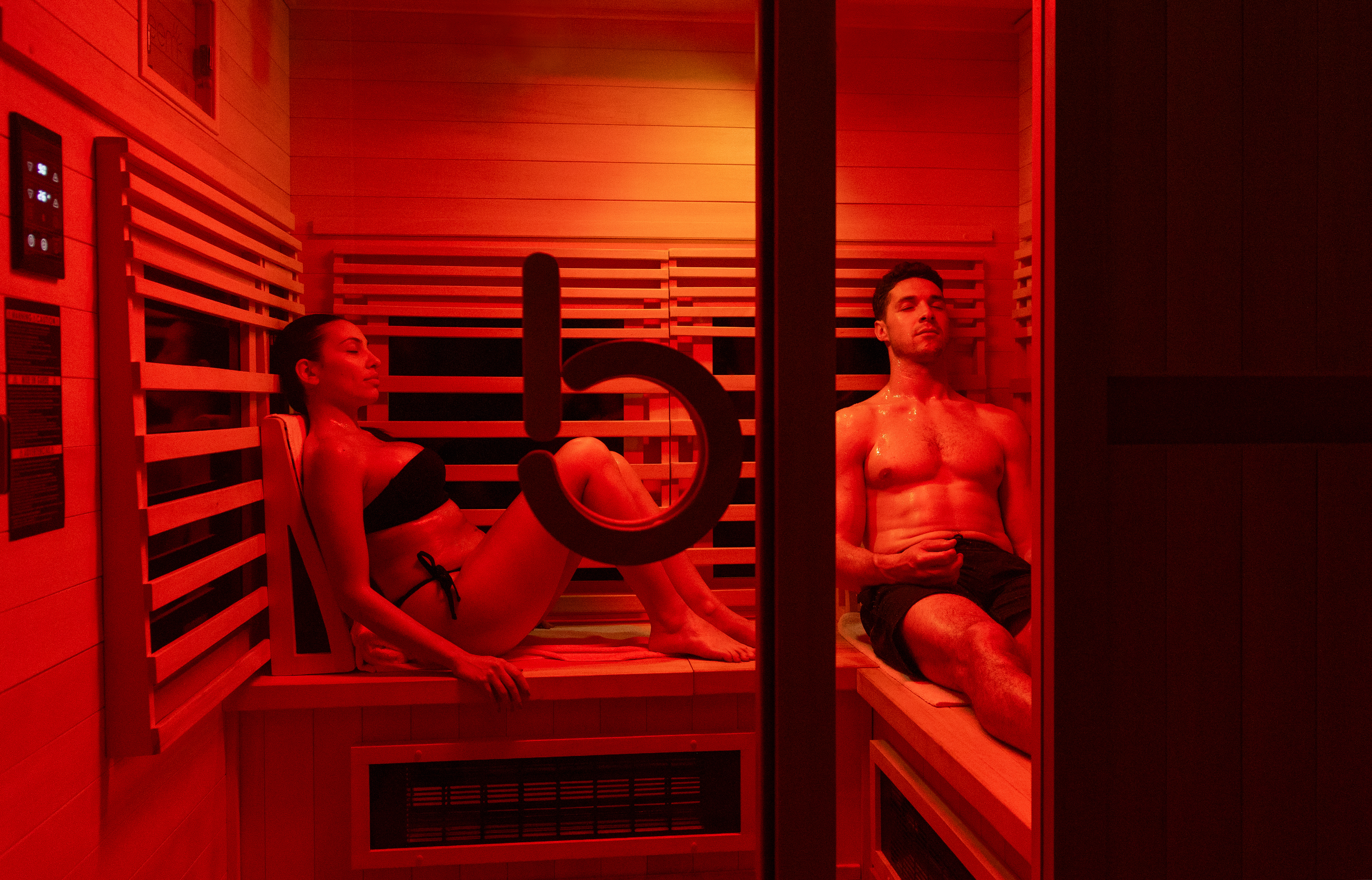
How does this relate to beem®? beem® offers medical-grade red light beds that use red and near-infrared wavelengths. A session can be an opportunity to pause and make time for yourself. Because results depend on wavelength, intensity, duration, device, and the people studied, findings from one device cannot be assumed to apply to another.
Infrared Sauna vs. Red Light Therapy: Which Fits Your Holiday Recovery Routine?
Infrared sauna is a heat-based wellness experience; red light therapy is a light-based one. They work through different mechanisms and are supported by different research, so choose the one that best matches how you want to recover.
|
|
Infrared sauna |
Red light therapy |
|
What it uses |
Infrared energy (near, mid, and far) to warm the body |
Specific red and near-infrared wavelengths of light |
|
Type of experience |
Heat-based; you may sweat |
Light-based rather than heat-based |
|
What the sleep research shows |
Indirect: warm-bath studies and limited, mostly traditional-sauna research [1, 2] |
Early and mixed: modest self-reported improvements; objective measures largely unchanged [3, 4] |
|
May suit you if |
You enjoy warmth and want a quiet place to unwind |
You prefer a calm session without sitting in heat |
The beem® Experience brings together full-spectrum infrared sauna and red light therapy, so you can choose the session that fits your preferences and wellness routine. Neither modality replaces healthy sleep habits or medical care when you need it. Instead, both can be complementary ways to make intentional recovery part of your season.
Is It Safe to Use an Infrared Sauna or Red Light Therapy After Travel?
Talk with your healthcare provider before using infrared sauna or red light therapy if you are pregnant, have a heart condition or low blood pressure, take medications that affect heat tolerance or light sensitivity, or have any other health concern. After a long travel day, hydrate before and after a sauna session and follow studio safety guidance.
Avoid alcohol before an infrared sauna session, and skip or end a session if you feel unwell, dizzy, or overheated. Studio staff can walk you through session guidance before you begin.
When Should You Book a beem® Session During the Holidays?
Book a beem® session whenever it fits comfortably into your travel and self-care routine, such as before a busy travel week, between gatherings, or after you return home. Choose the modality that suits you, and keep consistent sleep habits at the center of your recovery.
Make Recovery Part of Your Holiday Routine
Holiday travel can be exciting, but it doesn’t have to mean putting your own well-being last. Small, consistent habits can help you navigate changing schedules, create space to unwind, and feel more prepared for the season ahead. Whether you prioritize a steady sleep routine, a quiet moment to yourself, or a visit to beem®, recovery deserves a place on your calendar.
Give yourself the green light to slow down, recharge, and make time for what helps you feel your best.
Book the beem® Experience at a studio near you.
Frequently Asked Questions
Can an infrared sauna help you sleep better?
Research suggests passive body heating, such as a warm bath one to two hours before bed, may help people fall asleep faster and improve sleep efficiency. Research specifically on infrared sauna and sleep remains limited. An infrared sauna session may be a relaxing addition to a wellness routine, but it is not a proven treatment for sleep disorders. [1, 2]
Does red light therapy improve sleep quality?
Early research on red and near-infrared light therapy, also called photobiomodulation, suggests a possible modest benefit for self-reported sleep quality. Objectively measured sleep has not consistently improved, and studies use different devices and protocols, so more research is needed before red light therapy can be considered a reliable sleep aid. [3, 4]
How do I recover from holiday travel fatigue?
Recover from holiday travel fatigue by keeping regular sleep and wake times, following local time at your destination, getting daylight at the right times, staying hydrated, limiting alcohol, keeping naps short, and moving throughout the day. Scheduling deliberate downtime, such as a quiet walk or a wellness session, can also help you recharge. [5]
Does beem® help with jet lag?
beem® offers infrared sauna and red light therapy as wellness experiences that can complement a broader recovery routine. Neither has been established as a way to prevent or treat jet lag. Evidence-based approaches to jet lag include timed light exposure, gradual sleep schedule adjustments, hydration, and following the destination’s local time. [5, 6]
What is the difference between infrared sauna and red light therapy?
Infrared sauna uses infrared energy to warm the body, creating a heat-based wellness experience. Red light therapy uses specific wavelengths of red light, sometimes combined with near-infrared light, in a light-based session known as photobiomodulation. The two are distinct modalities with different mechanisms and different research evidence.
How can I adjust to a new time zone during holiday travel?
To adjust to a new time zone, shift your sleep schedule gradually before you leave, then follow local time for meals, sleep, and activities once you arrive. Morning light generally helps after traveling east, and evening light after traveling west. Keep naps to about 20 minutes and avoid excess alcohol. [5, 6]
This article is for general informational purposes only and is not medical advice. beem® sessions are wellness experiences and are not intended to diagnose, treat, cure, or prevent any disease or medical condition. Consult a qualified healthcare provider about sleep problems or before starting any new wellness practice.
Scientific References
[1] Haghayegh S, Khoshnevis S, Smolensky MH, Diller KR, Castriotta RJ. Before-bedtime passive body heating by warm shower or bath to improve sleep: A systematic review and meta-analysis. Sleep Medicine Reviews. 2019;46:124–135. https://doi.org/10.1016/j.smrv.2018.10.004
[2] Patrick RP, Johnson TL [VERIFY AUTHORS]. The multifaceted benefits of passive heat therapies for extending the healthspan: A comprehensive review with a focus on Finnish sauna. Temperature (Austin). 2024;11(1):27–51. https://pmc.ncbi.nlm.nih.gov/articles/PMC10989710/
[3] [VERIFY AUTHORS] A randomized, sham-controlled trial of a novel near-infrared phototherapy device on sleep and daytime function. Journal of Clinical Sleep Medicine. 2023;19(9):1669–1675. https://pubmed.ncbi.nlm.nih.gov/37141002/
[4] [AUTHORS, TITLE, JOURNAL, VOLUME/PAGES TO COMPLETE] Photobiomodulation and sleep quality: systematic review and meta-analysis. 2026. https://pubmed.ncbi.nlm.nih.gov/42322437/
[5] Centers for Disease Control and Prevention. Jet Lag Disorder. CDC Yellow Book: Health Information for International Travel. https://www.cdc.gov/yellow-book/hcp/travel-air-sea/jet-lag-disorder.html
[6] Sack RL. Jet lag. New England Journal of Medicine. 2010;362(5):440–447. https://doi.org/10.1056/NEJMcp0909838